
Introduction to Page Speed and Its Importance
Page speed, often referred to as load time, is the measure of how quickly a web page displays its content to users. In the digital age, where attention spans are short, users expect immediate access to information. Therefore, understanding page speed and its significance in website performance is crucial for any business, especially for Sri Lankan enterprises aiming to thrive in a competitive online environment.
The importance of page speed cannot be overstated, as it directly impacts user experience. Research indicates that even a one-second delay in load time can lead to increased bounce rates, meaning potential customers are likely to leave a site if it does not load quickly enough. This detrimental effect on user engagement can jeopardize customer satisfaction, which is vital for fostering loyalty and repeat business.
Moreover, an array of studies has established a clear correlation between page speed and conversion rates. For Sri Lankan businesses that rely heavily on their online presence for sales and customer interaction, optimizing website speed can result in significant revenue increases. Faster websites not only enhance user satisfaction but also improve search engine rankings. Google, among other search engines, takes page speed into account when indexing websites, making it a key element of effective search engine optimization (SEO).
Addressing page speed should be a priority for Sri Lankan businesses looking to optimize their websites. In a market where every second counts, investing in measures to enhance page speed can yield substantial dividends, both in user experience and business profitability. By understanding the significance of page speed, companies can take the necessary steps to ensure that they provide a fast, efficient, and pleasant browsing experience for their customers.
Understanding the Metrics of Page Speed
Page speed is a critical aspect of website performance that directly influences user experience and search engine optimization (SEO). Several key metrics are utilized to measure page speed, helping businesses understand how their websites perform under various conditions. Each of these metrics serves a distinct purpose and can significantly impact how users interact with a website.
One of the primary metrics is Time to First Byte (TTFB), which measures the amount of time it takes for a user’s browser to receive the first byte of information from the server. A lower TTFB indicates a faster connection and a more responsive experience for users. This metric is especially important for Sri Lankan businesses seeking to optimize their sites for local traffic, as delays can result in potential customers leaving the site before it fully loads.
Another vital metric is fully loaded time, which captures the total time taken for a page to completely display all of its content. This includes images, stylesheets, scripts, and other resources. Fully loaded time is crucial as it reflects the overall user experience; longer load times can lead to higher bounce rates, negatively impacting a site’s SEO rankings.
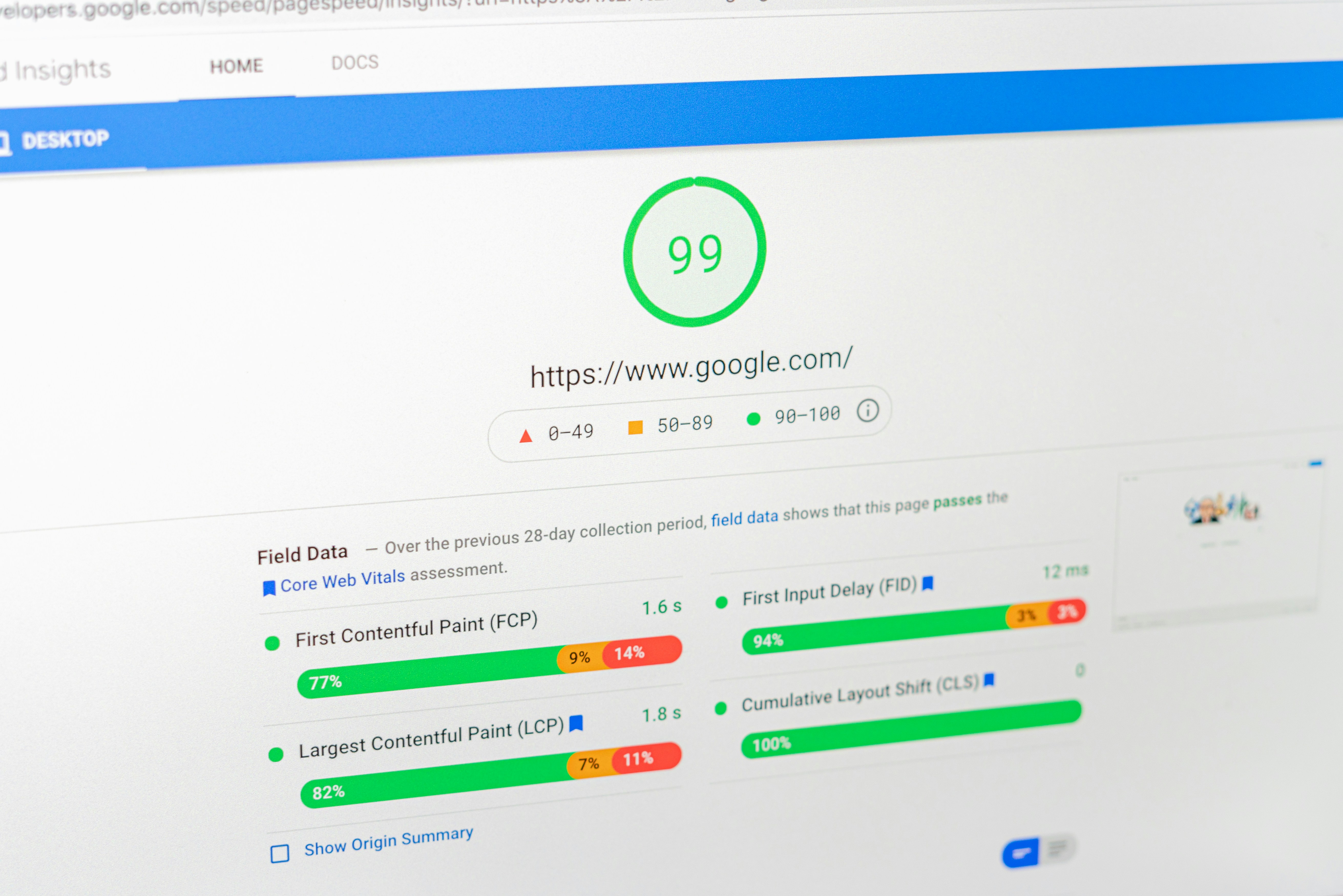
In addition to these, First Contentful Paint (FCP) and First Input Delay (FID) are also essential metrics. FCP measures the time it takes for the first piece of content to be rendered on the screen, indicating how quickly users can begin to engage with the site. Meanwhile, FID measures the time between a user’s first interaction and the browser’s response, signifying the responsiveness of the site under user load. Understanding and optimizing these metrics is vital for ensuring that websites not only perform well but also retain visitors effectively.
Impact of Page Speed on User Experience
In the digital landscape, page speed is a crucial factor that directly influences user experience. A website that loads swiftly can significantly enhance visitor satisfaction, whereas slow-loading pages often lead to frustration and increased bounce rates. Studies highlight that 47% of users expect a webpage to load in two seconds or less, and a delay of just one second can result in a 7% reduction in conversions. This correlation exemplifies how critical page speed is to retaining users and driving engagement.
For businesses in Sri Lanka, the impact of page speed on user experience is particularly relevant. As the number of internet users continues to rise, local businesses must ensure that their websites are optimized for speed. Research conducted on Sri Lankan websites has shown that those with faster loading times experience significantly lower bounce rates. Specifically, sites that load in under three seconds can reduce bounce rates by up to 30%, thereby allowing more users to navigate and engage with the content. This trend underscores the necessity for businesses to prioritize page speed in their digital strategies.
Moreover, improved page speed not only enhances user satisfaction but also leads to higher retention rates. Users are more likely to return to a website that provides a seamless browsing experience. Case studies from successful Sri Lankan e-commerce websites demonstrate that by optimizing their page loading times, they have achieved notable increases in customer return rates and overall revenue. In essence, faster websites create an inviting atmosphere for users, which can convert casual visitors into loyal customers. As a result, page speed emerges as not just a technical metric, but a vital component in the business success equation.
Consequences of Poor Page Speed on Revenue
In the digital landscape, the speed at which a webpage loads can significantly influence a business’s profitability. For Sri Lankan businesses, where competition is steep, the implications of having a slow-loading website are particularly acute. A website that takes several seconds to load can deter potential customers, leading to a substantial loss in revenue.
One of the immediate consequences of poor page speed is the increase in cart abandonment rates. Research has shown that nearly 70% of shoppers abandon their carts due to slow page loading times. This statistic underscores the critical need for Sri Lankan e-commerce platforms to ensure optimal performance. When users experience delays during the checkout process, their frustration mounts, often resulting in lost sales opportunities.
Additionally, slow-loading sites negatively impact search engine rankings. Google, for example, prioritizes fast-loading websites in its search results. As a result, Sri Lankan businesses with slower pages may find themselves ranking lower, which decreases their visibility to potential customers. This lower ranking directly correlates with reduced traffic and, consequently, diminished revenue-generating opportunities.
Furthermore, the user experience is severely affected by poor page speed. If a user has to wait an excessive amount of time for a page to load, they are less likely to return to that website in the future. Studies indicate that repeat visitors are crucial for sustained revenue growth, as these users often convert at higher rates compared to first-time visitors. A slow website can thus create a vicious cycle where the lack of repeat business feeds into a decline in revenue generation.
In summary, the financial consequences of insufficient page speed can be substantial. From lost sales due to high cart abandonment rates to diminished search engine visibility and a decrease in loyal customers, the negative impact on revenue cannot be overstated. For Sri Lankan businesses aiming to thrive in a competitive online market, improving page speed is an urgent necessity.
SEO Implications of Page Speed
In the digital landscape, page speed has emerged as a pivotal element influencing search engine optimization (SEO). Search engines, particularly Google, have increasingly prioritized faster-loading websites in their algorithms. This emphasis on speed is not merely a technical preference but a response to user behavior and expectations. As a result, businesses in Sri Lanka must recognize that improving page speed is crucial for enhancing their visibility in search engine results.
When a website loads quickly, it is not only favorable to users but also significantly affects its ranking on search engine results pages (SERPs). Websites that perform poorly in terms of loading speed tend to experience higher bounce rates, meaning that visitors leave the site before even engaging with its content. This abandonment correlates with declining visibility, as search engines interpret high bounce rates as a signal of insufficient quality or relevance. Consequently, businesses that ignore the importance of page speed risk losing valuable organic traffic.
Furthermore, faster page loads can enhance click-through rates (CTR). When users encounter a website that loads swiftly, they are more likely to explore multiple pages and engage with the content. This engagement signals to search engines that the website delivers quality experiences, potentially pushing it higher in organic search rankings. Thus, a swift-loading site not only attracts initial clicks but encourages deeper exploration, ultimately leading to increased traffic and potential conversions.
To summarize, page speed plays a fundamental role in SEO by influencing both search rankings and user experience. Sri Lankan businesses that prioritize optimizing their website’s loading speed stand to benefit from enhanced visibility, improved click-through rates, and increased overall traffic, cultivating a stronger online presence and better customer engagement.
Best Practices for Improving Page Speed
To enhance the performance of a website and boost page speed, it is essential to adopt several key practices. One of the foremost strategies is optimizing images. Large image files can significantly slow down load times; hence, using tools to compress images without compromising quality is crucial. Formats like WebP can also be utilized for better compression rates. Furthermore, it’s advisable to ensure that images are adequately sized according to their display dimensions, which helps in reducing unnecessary loading times.
Another vital practice involves minimizing code. This can be achieved by removing excess characters, comments, or code that is not essential for rendering the web page. Tools such as CSS and JavaScript minifiers can automate this process, streamlining the codebase and significantly improving load times. Additionally, combining multiple CSS and JavaScript files into single files can reduce the number of HTTP requests, which contributes to faster loading.
Leveraging browser caching is yet another effective technique. When users visit a website, certain static resources like images, CSS files, and JavaScript files can be saved in the user’s browser cache. By configuring appropriate caching rules, businesses can ensure that returning visitors experience quicker load times, as the browser retrieves these resources from local storage rather than from the server. Furthermore, Content Delivery Networks (CDNs) can be used to serve static file resources, thereby distributing the load and improving speed for users located in various geographic regions.
Other technical improvements such as optimizing server response times, using asynchronous loading for JavaScript, and implementing lazy loading for images can be beneficial. By taking these steps, businesses in Sri Lanka can significantly enhance their website performance, leading to an improved user experience and ultimately, greater revenue opportunities.
Tools for Measuring and Optimizing Page Speed
For businesses in Sri Lanka looking to improve online performance, a variety of tools are available to measure and optimize page speed, ultimately enhancing user experience and boosting revenue. One of the primary tools is Google PageSpeed Insights. This free tool provides a thorough analysis of a website’s performance on both mobile and desktop devices. Users receive a score out of 100, accompanied by suggestions for improving page load times. Key aspects evaluated include server response times, image optimization, and JavaScript execution. By following the recommendations, businesses can effectively enhance load speeds and overall performance.
Another popular tool is GTmetrix, which offers a detailed breakdown of web performance. It combines Google PageSpeed and Yahoo’s YSlow metrics to provide insights into performance scores and suggested improvements. Additionally, GTmetrix offers features such as waterfall charts that visualize a website’s page load process, helping identify bottlenecks. This visualization allows businesses to make informed decisions about which elements to optimize for better page speed.
Beyond these, Pingdom is another notable tool that allows users to test their website’s loading time from various global locations. This capability is particularly beneficial for international businesses aiming to optimize their website speed for users around the world. Users are presented with performance grades and receive actionable insights, such as the importance of minimizing HTTP requests and leveraging browser caching.
Lastly, WebPageTest offers a deeper level of analysis by allowing users to simulate real-world loading conditions. By adjusting settings, users can assess how their websites perform under different network speeds and hardware devices. This versatile tool helps fine-tune website performance across various scenarios.
Case Studies: Successful Implementation in Sri Lankan Businesses
In recent years, several Sri Lankan businesses have recognized the critical importance of page speed in enhancing their overall website performance. Among these, a prominent e-commerce platform dramatically improved its page load time from 8 seconds to just under 3 seconds. This optimization was achieved through a comprehensive approach, including the implementation of a content delivery network (CDN), image compression techniques, and minimizing JavaScript execution. As a direct result, the site observed a 25% increase in conversion rates, highlighting how significant reductions in load times can result in substantial revenue growth.
Another notable success story involves a local travel agency that faced challenges in customer retention due to slow website performance. They employed a mobile-first design strategy, optimizing their website for mobile devices as a large segment of their clientele accessed services via smartphones. Through rigorous testing and the application of best practices in web performance optimization, they were able to cut their load time by over 70%. Post-implementation analytics revealed an increase in user engagement, with a 40% boost in the average duration of visits. Such improvements can significantly enhance business outcomes, proving that investing in page speed is essential for success in today’s digital landscape.
Furthermore, a popular news website in Sri Lanka sought to retain readership amidst increasing competition. By utilizing advanced caching techniques and lazy loading of images and videos, they improved their page speed, which led to a stark reduction in bounce rates. Consequently, this online news outlet not only retained more visitors but also benefited from higher advertising revenues as a direct consequence of improved performance metrics. These case studies exemplify the transformative power that optimized page speed can exert on businesses, underscoring the necessity for companies across Sri Lanka to prioritize website performance for long-term success.
Conclusion: The Value of Time for Sri Lankan Businesses
In the realm of digital commerce, time translates to money, particularly for Sri Lankan businesses aiming to thrive in an increasingly competitive environment. Throughout this discussion, we have scrutinized the crucial relationship between page speed and overall website performance. Slow-loading websites not only deter potential customers but also diminish the overall user experience, which can have long-lasting repercussions on brand loyalty and revenue generation.
Numerous studies have demonstrated that even a one-second delay in loading time can result in significant drops in conversion rates. For Sri Lankan businesses, where every moment counts amidst the changing tides of consumer behavior and technological adoption, optimizing page speed should no longer be an afterthought but instead a top priority. A seamless and swift browsing experience can enhance customer satisfaction, subsequently leading to increased sales and revenue. Furthermore, Google’s algorithm also favors faster websites, which means that improved page speed can positively influence search engine rankings and visibility, making it essential for businesses to invest in this aspect of their digital strategy.
As we have seen, the implications of page speed extend beyond mere performance. They encompass the brand’s reputation, operational efficiency, and potential market reach. To harness these advantages, Sri Lankan businesses are encouraged to assess their current website specifications, identify bottlenecks causing delays, and take corrective measures to enhance their loading times. By doing so, they not only improve user engagement but also position themselves favorably in the market.
In summary, understanding the value of time in the digital landscape can significantly impact the trajectory of businesses in Sri Lanka. Investing in page speed optimization is not merely an enhancement; it is a strategic imperative that can lead to sustained growth and competitive advantage.